近年来,入侵植物介导的环境生态风险日益凸显。所以,阐明入侵植物成功入侵的关键驱动机理,已成为当前入侵生态学研究领域中备受关注的重大关键科学问题之一。
更为重要的是,一种入侵植物成功入侵后,可以创造一个利于其他种类的入侵植物成功入侵的微环境条件,进而可以明显提升其他种类的入侵植物成功入侵的几率,从而导致多种入侵植物在同一生境中共同入侵(Co-invasion),也称次生入侵(Secondary invasion),或协同入侵(Mutualist facilitation),或入侵塌陷(Invasion meltdown),或入侵漩涡(Invasion vortex)。因此,不同种类的入侵植物可以共同参与新架构的多物种生态互作网络(Multispecies ecological interaction networks),并可能互相利于彼此的入侵进程,进而导致已被一种入侵植物成功入侵的生境更易遭受其他种类的入侵植物的成功入侵,从而形成生物入侵进程中的马太效应(Matthew Effect),且可能造成新的、更复杂的、更严重的生态影响。
基于此,我所王从彦研究团队(江苏大学入侵生物学研究团队)聚焦当前入侵生态学领域备受关注的重大前沿科学问题之一,并独辟蹊径,重点解析三种菊科入侵植物共同入侵对植物物种多样性、种间互作强度、入侵植物相对盖度优势度、入侵植物入侵强度、群落可入侵性的影响,以期进一步阐明耦合调控多种入侵植物共同入侵的关键驱动机理。
本研究的主要结论具体如下:
(1)与未入侵的植物群落相比,一种入侵植物的入侵显著降低了植物丰度。
(2)在入侵状态下,随着入侵植物种类数量的增加,植物物种多样性、入侵植物入侵强度、群落可入侵性也随之显著增加。
(3)已被入侵的植物群落的种间互作强度显著低于未入侵的植物群落的种间互作强度,且在入侵状态下,植物群落的种间互作强度不受入侵植物种类数量的调控。
(4)在入侵状态下,入侵植物的相对盖度优势度不受入侵植物种类数量的影响。
(5)群落可入侵性主要受其入侵植物入侵强度和总相对盖度的驱动。
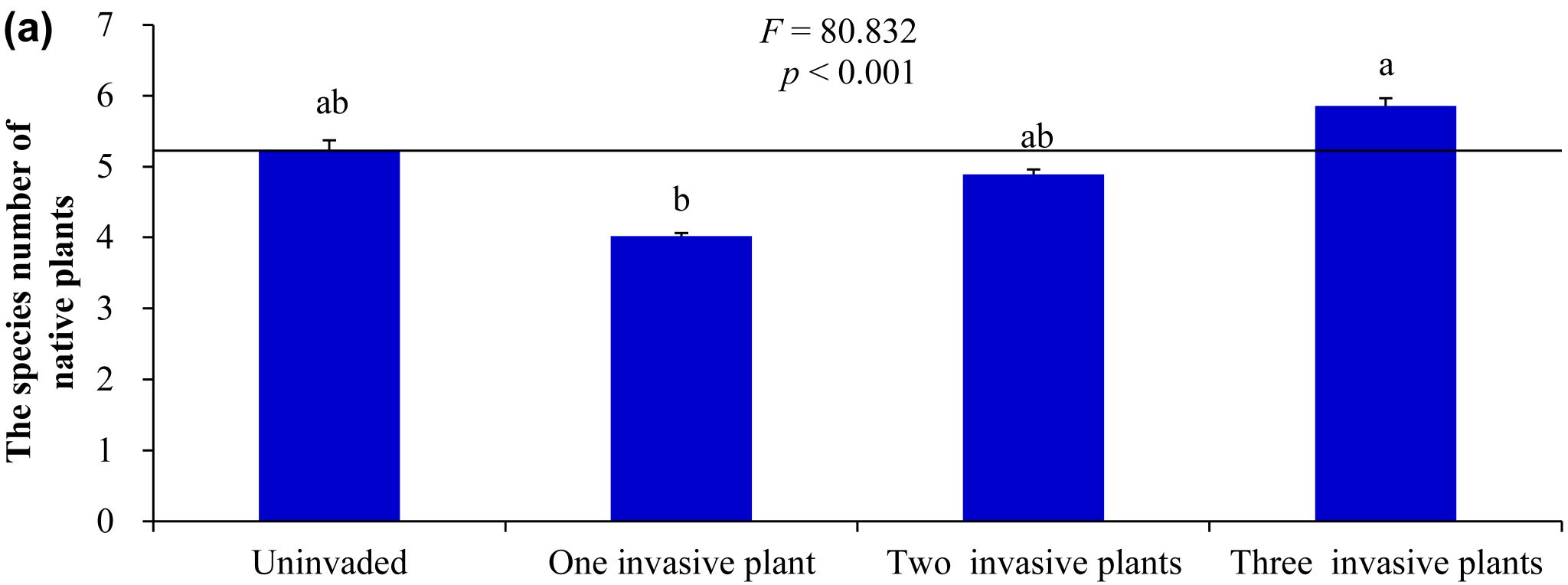
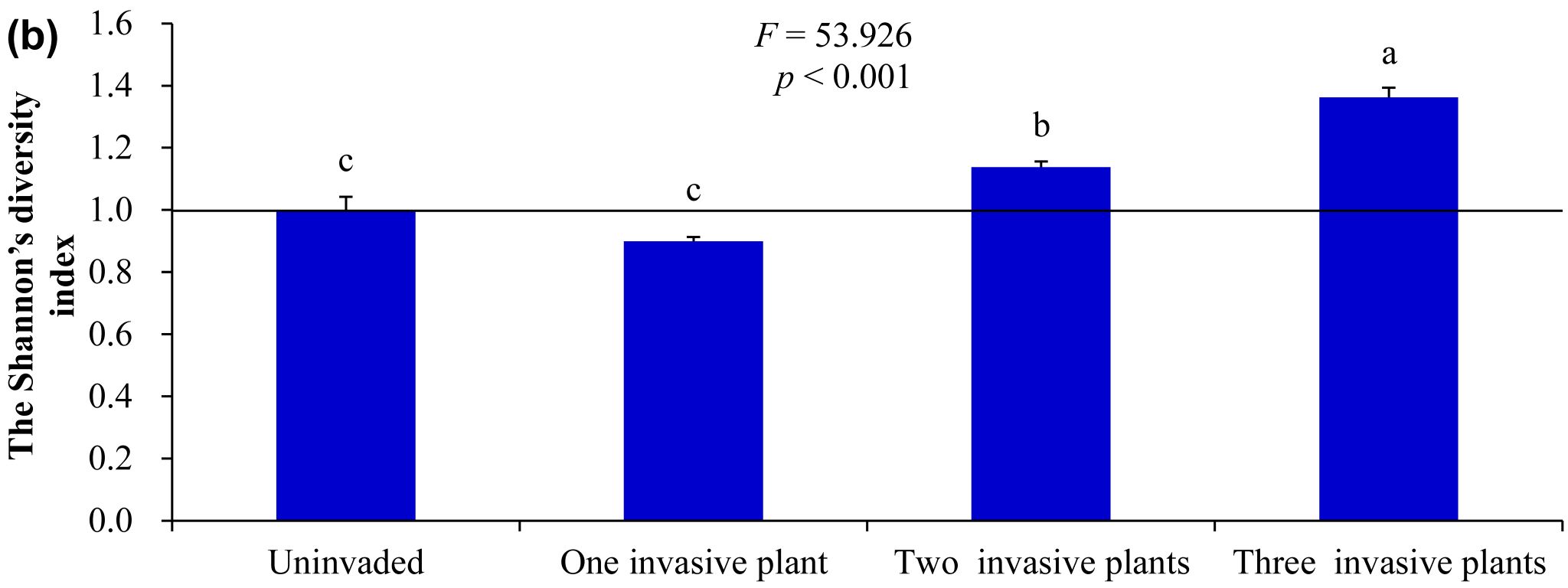
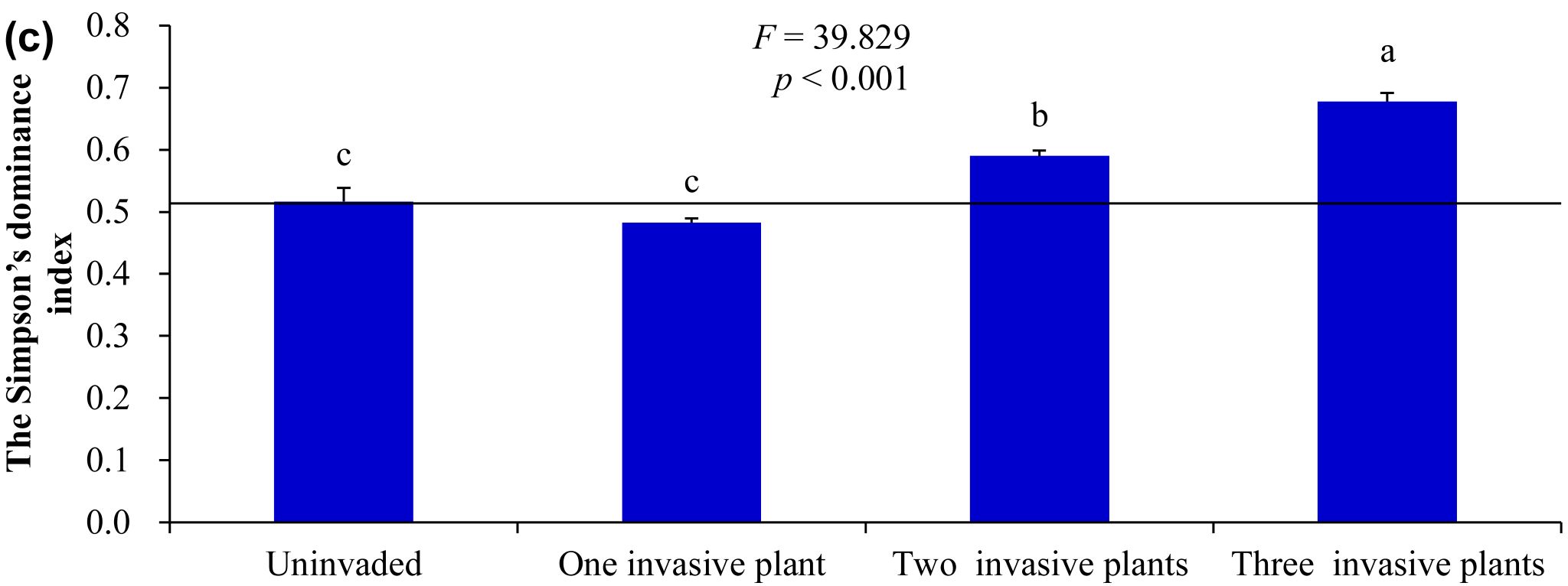
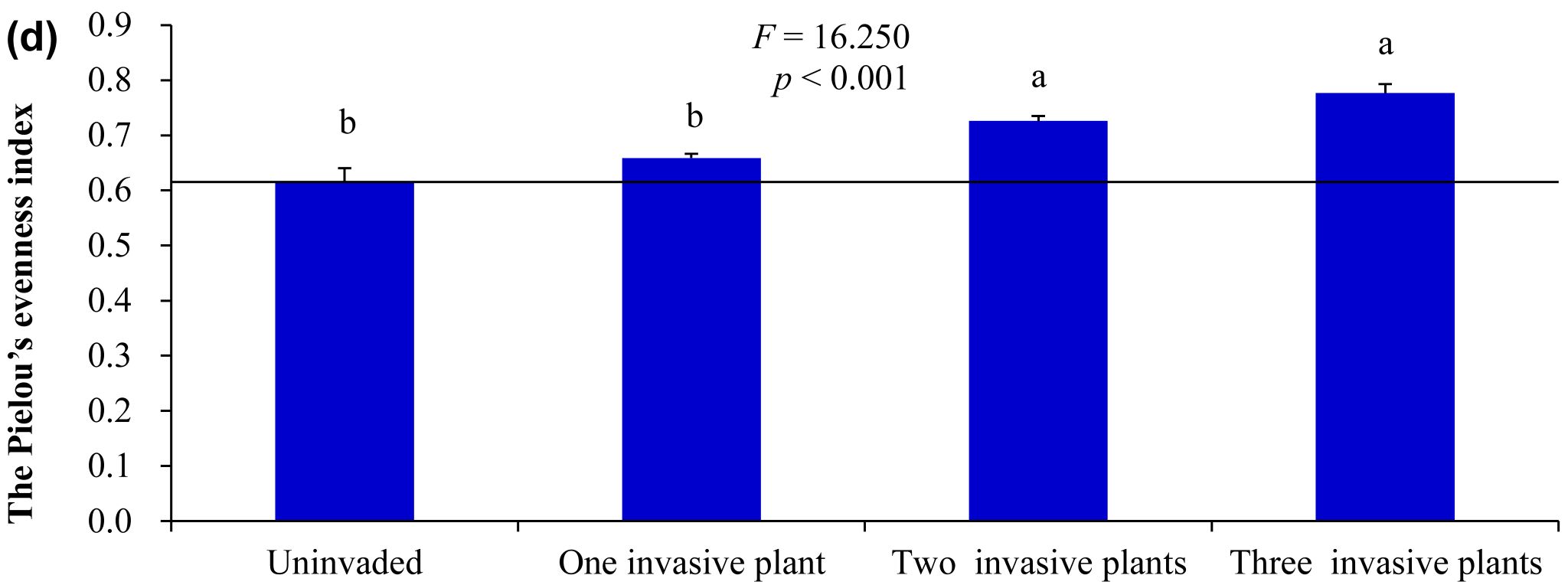
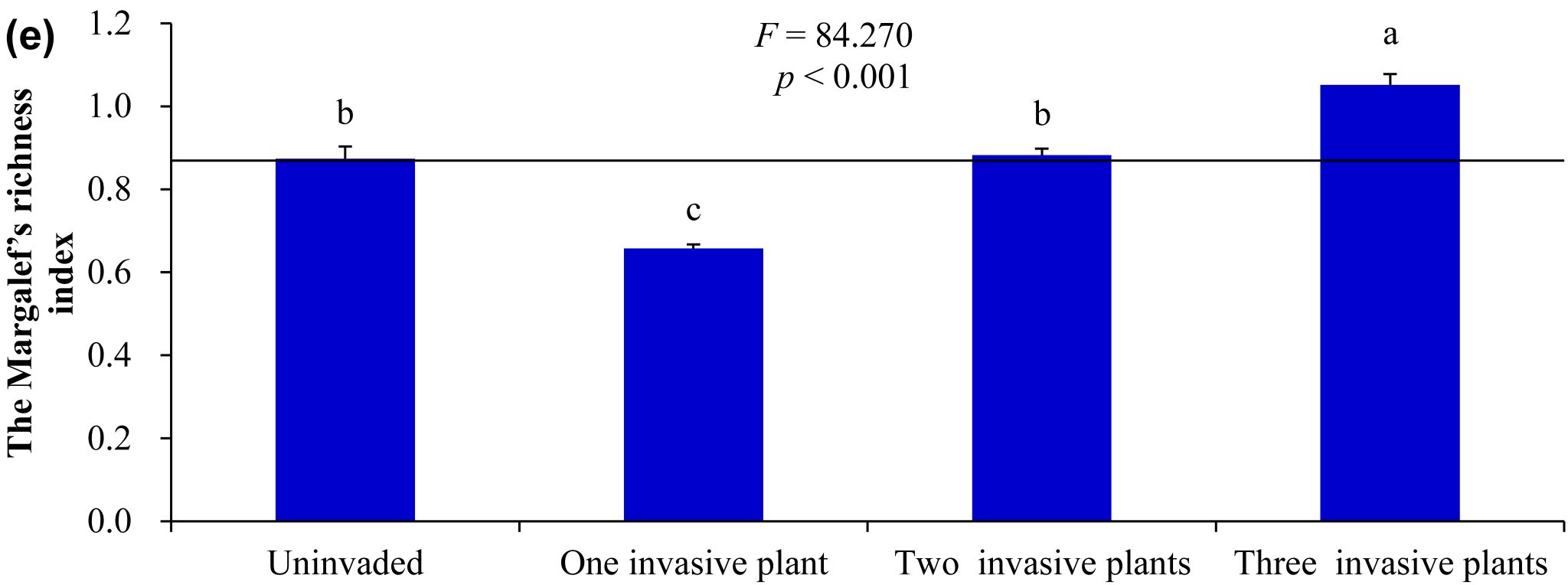
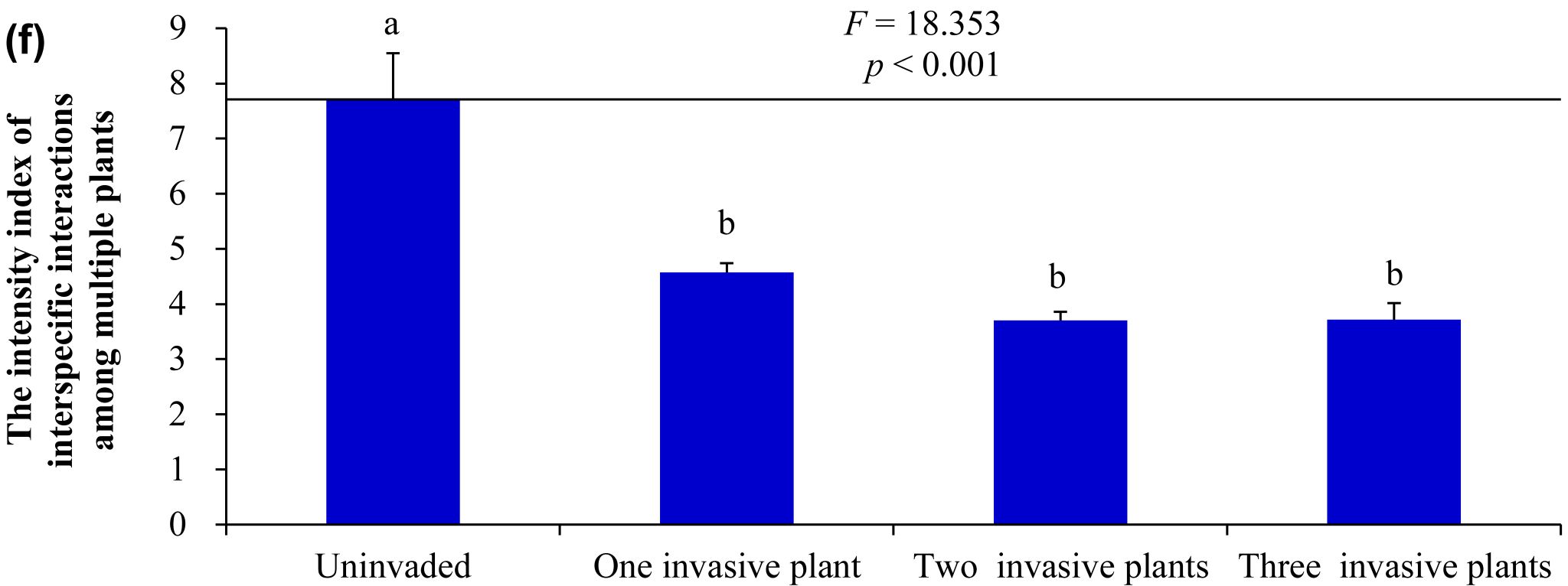
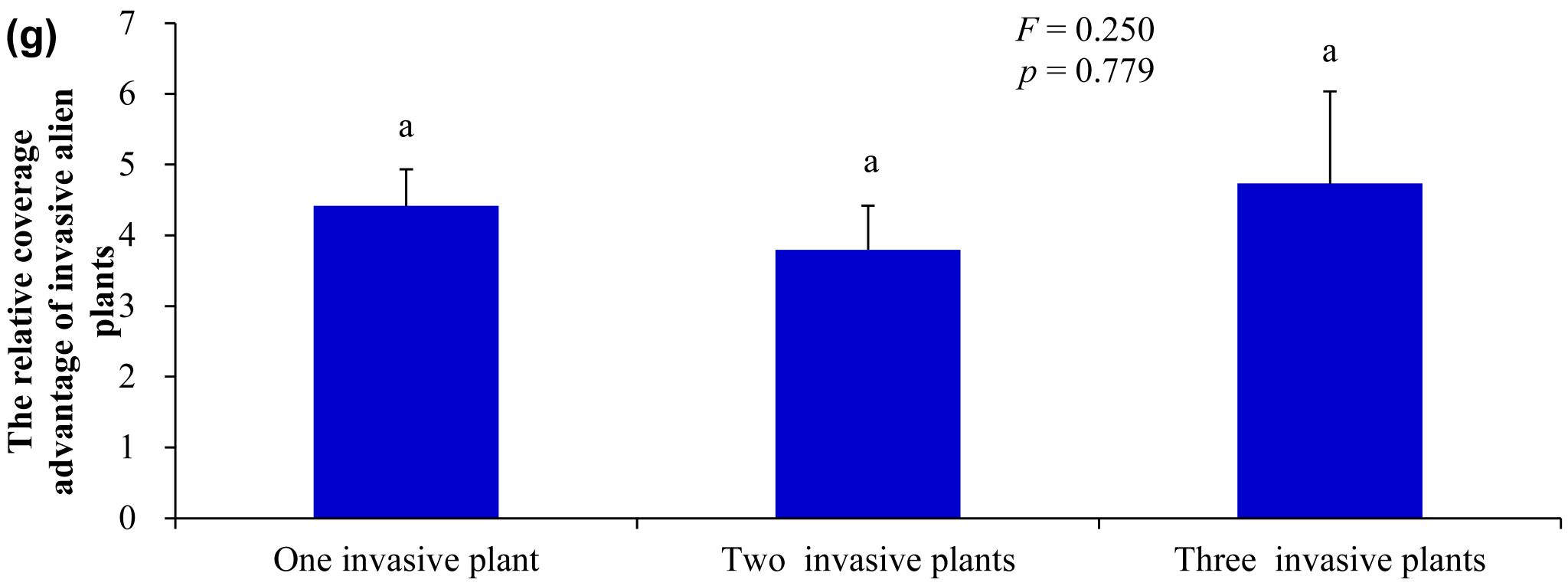
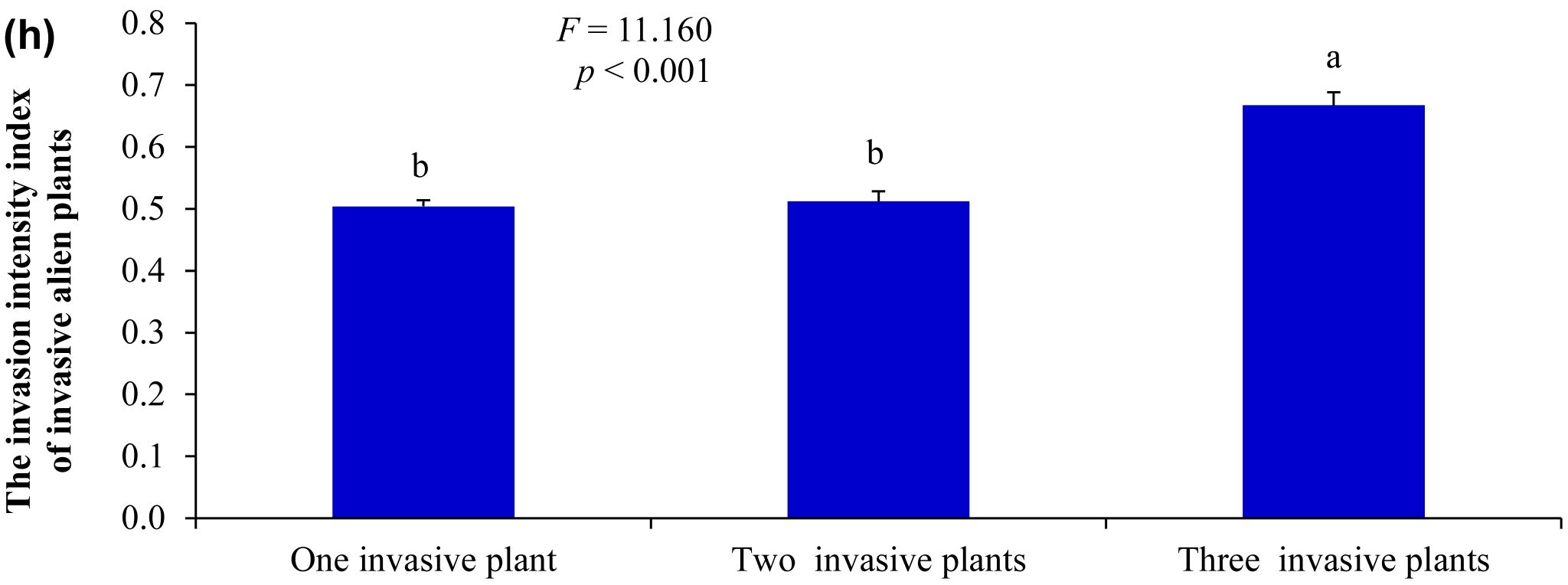
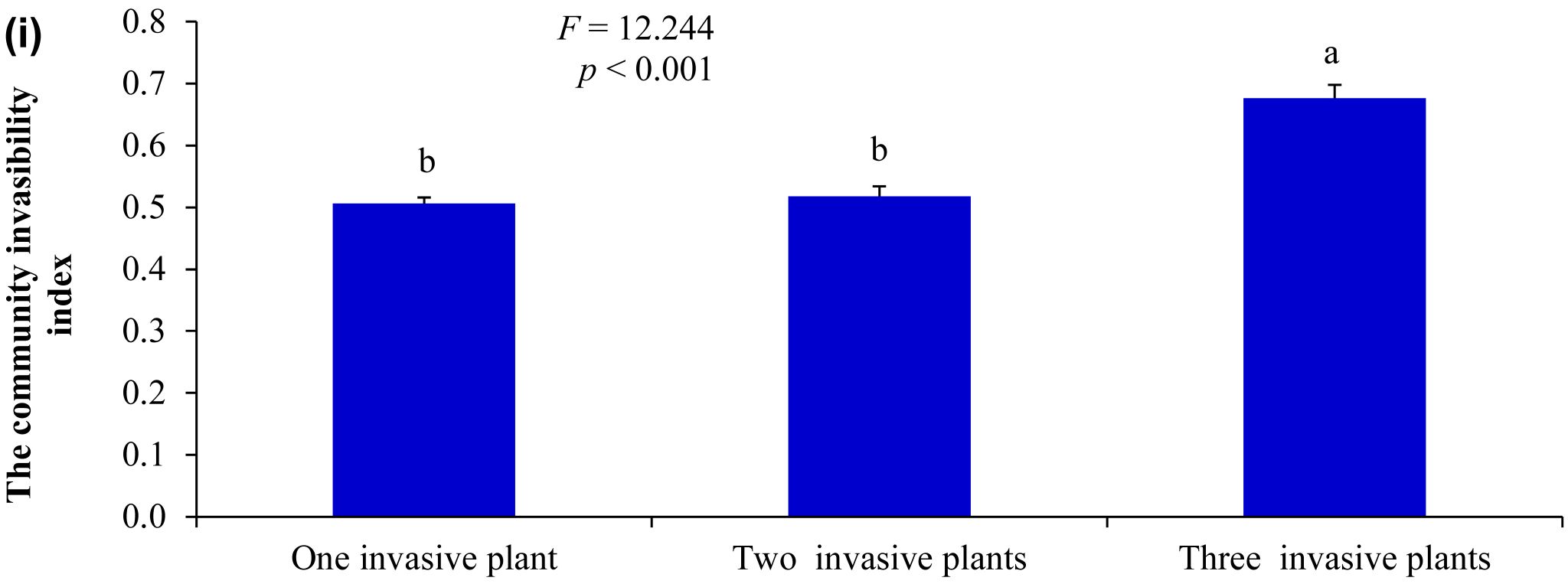
Fig. 1 Differences in the measured indices under different invasion conditions (a, the species number of native plants; b, the Shannon’s diversity index; c, the Simpson’s dominance index; d, the Pielou’s evenness index; e, the Margalef’s richness index; f, the intensity index of interspecific interactions; g, the relative coverage advantage of invasive plants; h, the invasion intensity index of invasive plants; i, the community invasibility index). Data (mean & standard error) with different lowercase letters indicate statistically significant differences at 0.05 probability. Abbreviations: uninvaded, the mean of the uninvaded plots (control; no invasion by any invasive plants) (n = 90); one invasive plant, the mean of the plots under mono-invasion caused by one invasive plant (n = 825); two invasive plants, the mean of the plots under co-invasion caused by two invasive plants (n = 278); three invasive plants, the mean of the plots under co-invasion caused by three invasive plants (n = 69).
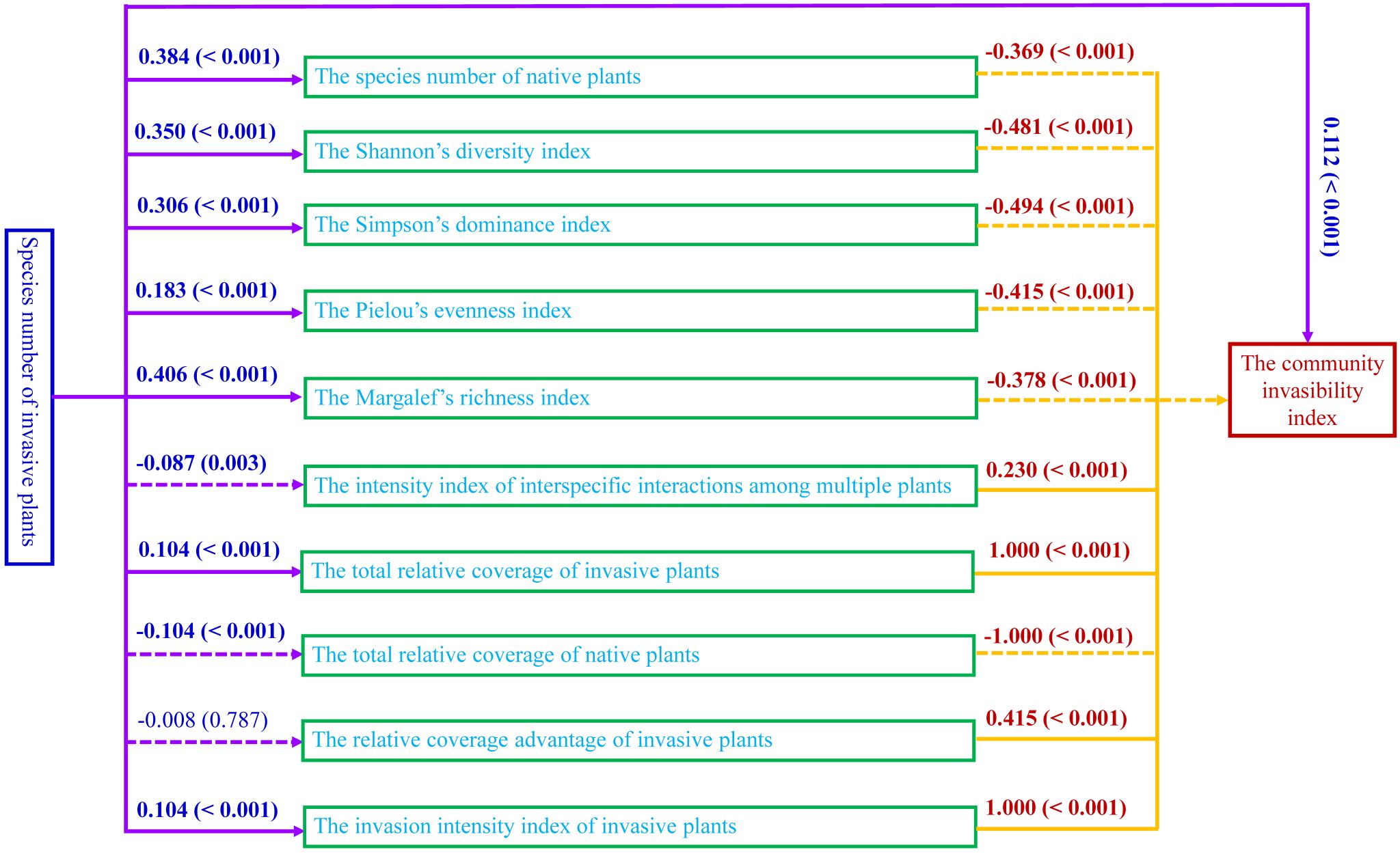
Fig. 2 The schematic diagram of the influences of the species number of invasive plants (dark blue numbers) on the variances as well as the influences of the variances (fuchsia numbers) on the community invasibility index under the invasion conditions. Positive values (solid lines) mean positive influences, while negative values (dashed lines) mean negative influences. The stronger the influence, the greater the deviation from 0; and vice versa. The p-value is presented in the parentheses. p ≤ 0.05 are shown in bold.
同时,我所王从彦研究团队(江苏大学入侵生物学研究团队)还提出表征入侵植物盖度优势度强弱的量化指标(即:相对盖度优势度指数Relative coverage advantage index of invasive plants)。该指标计算方法如下:
RCA = RCi / RCn
式中RCi为调查样方内入侵植物i的相对盖度,RCn为调查样方内所有本地植物种的相对盖度。RCA值越大表示入侵植物相对盖度优势度越高。
近年来,我所王从彦研究团队(江苏大学入侵生物学研究团队)以国家生态安全重大战略需求为导向,聚焦入侵植物介导的生态安全问题,以加拿大一枝黄花、小蓬草、鬼针草、互花米草、反枝苋、火炬树等入侵植物为研究对象,重点阐明入侵植物关键入侵机理、剖析入侵植物环境生态效应、评估入侵植物环境生态风险,旨在为新时代下构筑我国入侵植物介导的生态安全问题之预警管控奠定强力的理论支撑,为按时实现新时代国家生态安全重大战略需求目标提供坚实的科学依据。。
近年来,团队先后提出了阐明入侵植物成功入侵的低可塑性-高收益假说(即:The “low plasticity-high benefit hypothesis for successful invasion”)、亲缘识别驱动一种入侵植物成功入侵以及多种入侵植物共同入侵关键调控机理的假说(即:The “hypothesis of successful invasion and co-invasion of invasive plants driven by kin recognition”)、入侵植物成功入侵的跷跷板理论(即:The “seesaw theory” for the successful invasion of invasive plants based on their growth competitiveness)。
此外,团队还提出了一套可以简捷且精准量化入侵植物的入侵强度、入侵竞争力、竞争优势度及其环境生态风险等级,以及本地植物群落的可入侵性及其入侵抵抗力等方面的指标体系,即:
(1)表征入侵植物入侵强度的量化指标(即:入侵强度指数Invasion intensity index)。
(2)表征入侵植物入侵竞争力的量化指标(即:相对入侵力指数Relative invasiveness index)。
(3)表征入侵植物竞争优势度的量化指标(即:竞争优势度指数Competitive advantage index)。
(4)表征入侵植物对植物群落物种多样性影响力度的量化指标(即:入侵植物对植物物种多样性影响幅度指数Degree of influence index of invasive plants on plant taxonomic diversity)。
(5)表征植物群落可入侵性的量化指标(即:群落可入侵性指数Community invasibility index)。
(6)表征植物群落入侵抵抗力的量化指标(即:入侵抵抗力指数Invasion resistance index)。
(7)表征两种入侵植物共同入侵复合效应的量化指标(即:两种入侵植物共同入侵复合效应指数Co-invasion combined effect index of two invasive plants)。
(8)表征共同入侵下不同入侵植物竞争优势度差异的量化指标(即:共同入侵下不同入侵植物的相对竞争优势度指数Relative competitive advantage index of multiple invasive plants under co-invasion)。
(9)表征入侵植物和本地植物特征加权差异的量化指标(即:入侵植物和本地植物特征加权差异指数Community-weighted trait difference index between invasive plants and native plants)。
(10)表征多物种(包括入侵植物)种间互作强度的量化指标(即:多物种种间互作强度指数Intensity index of interspecific interactions among multiple plants)。
(11)表征植物(包括入侵植物)胁迫抵抗力的量化指标(即:胁迫抵抗力指数Stress resistance index)。
(12)表征植物(包括入侵植物)个体间亲缘识别能力的量化指标(即:植物根系生物量分配指数Root biomass allocation index)。
(13)表征亲缘识别能力对植物(包括入侵植物)生长竞争力贡献度的量化指标(即:亲缘识别促进指数Kin recognition facilitation index)。
全文链接:https://www.doi.org/10.1007/s42974-026-00300-w